What is Beaufort like when the summer crowds head home? If you are thinking about living here full-time, buying a second home, or simply getting to know the town beyond vacation season, that is the question that really matters. The good news is that Beaufort does not shut down when peak visitor months end. It simply becomes quieter, more local, and more tuned to the weather and waterfront. Let’s dive in.
Beaufort keeps its identity year-round
Beaufort is not a town that exists only for visitors. It is a historic waterfront community established in 1709, and the town describes it as the third oldest town in North Carolina and the seat of Carteret County. The Census Bureau lists 4,464 residents, which helps explain why life here can feel personal and close-knit in every season.
Tourism is a major part of the local economy, especially in the warmer months. At the same time, Beaufort’s economy is also supported by boat building and marine science research. That mix gives the town a steady, working-waterfront identity that continues well beyond summer.
Off-season means quieter, not empty
One of the biggest surprises for newcomers is that Beaufort beyond tourist season still feels active. The pace changes, but the core experience remains the same. You still have the waterfront, historic areas, public parks, and regular community rhythms.
What changes most is the sound level and the speed of daily life. Streets and docks feel less crowded, local errands can feel easier, and many days have a more resident-centered flow. For buyers who want charm without the busiest seasonal pace, that can be a real advantage.
Weather shapes daily life
In Beaufort, the off-season is influenced as much by weather as by visitation. Cape Lookout’s seasonal guidance notes spring temperatures generally range from 50°F to 70°F and above, summer often runs from 80°F to 100°F with high humidity, fall moves from the high 70s into the upper 40s, and winter can range from about 50°F down to 32°F, often with stronger winds.
That weather pattern matters because it affects how you plan your day. In cooler months, you may still spend time on the water or along the shore, but you are more likely to plan around wind, temperature, and marine conditions. The landscape stays accessible, but your routine becomes a little more weather-aware.
Waterfront life stays central
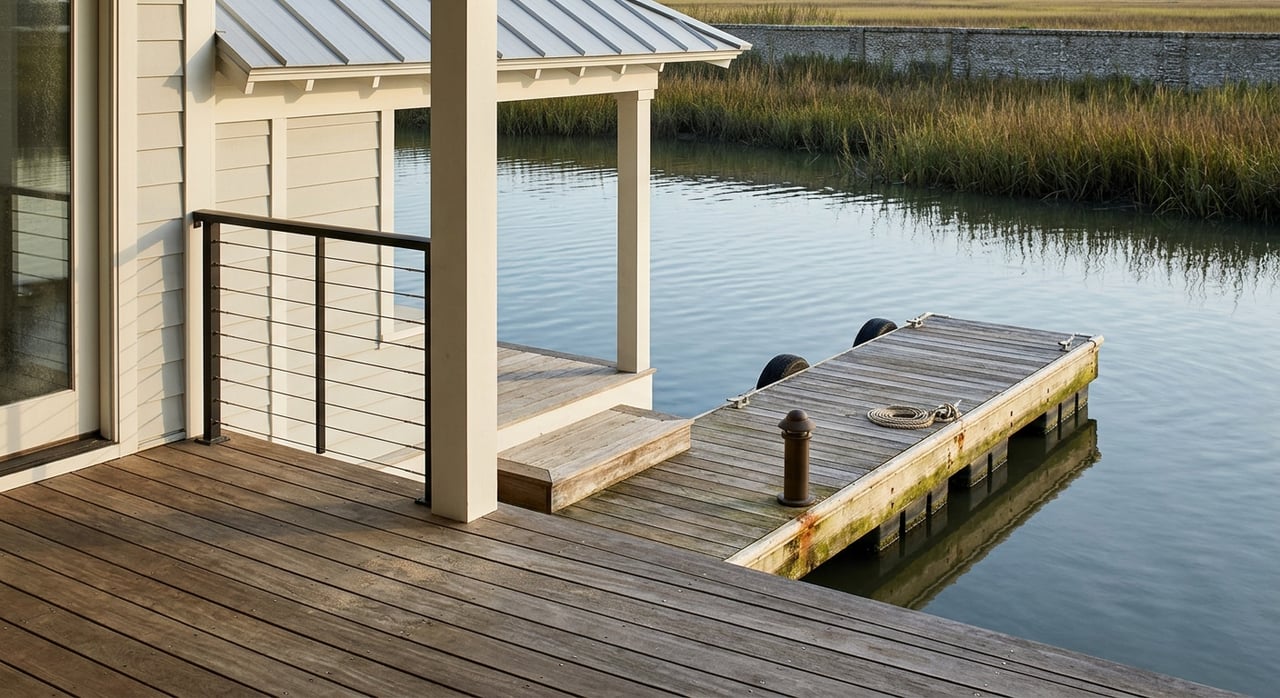
Even when visitor traffic drops, Beaufort still revolves around the water. The downtown area remains highly walkable, and the town continues to promote marina access and waterfront exploration as part of everyday life. That is important if you are considering Beaufort for a primary home or second home, because the waterfront is not just a seasonal attraction here. It is part of the town’s daily pattern.
Fishermen’s Park is one example of that practical waterfront access. It offers a dock, kayak and canoe launch, small-kayak storage, and a small sandy beach. For residents, that means simple ways to stay connected to the water even during quieter months.
Grayden Paul Park adds more year-round utility right on Taylor’s Creek. The park includes an elevated dock, floating dinghy dock, small-vessel launch, kayak storage, a bike rack, and a bicycle repair station. These are not just visitor features. They support how people actually move through and enjoy Beaufort.
The natural setting does not go away
One of Beaufort’s biggest strengths is that its scenery remains compelling all year. The Rachel Carson Reserve sits directly across Taylor’s Creek and spans 2,315 acres of tidal flats, salt marsh, ocean beach, sand dunes, and maritime forest. It also supports more than 200 bird species and a herd of feral horses.
That means everyday views in Beaufort can still feel remarkable in the so-called off-season. Even on a quiet winter or late-fall day, the landscape remains one of the town’s defining features. For many homeowners, that year-round visual connection to the coast is part of Beaufort’s long-term appeal.
Cape Lookout National Seashore adds another layer to local life. The park preserves 56 miles of mostly undeveloped barrier islands, and National Park Service guidance notes that winter can be one of the better times for shelling because lower visitation and storm surf may bring new material ashore. That creates a different kind of coastal experience, one that feels calmer and less crowded.
Shackleford Banks also remains part of the year-round backdrop. The area is known for more than 100 wild horses, which can be viewed by boat or passenger ferry. In practical terms, Beaufort’s coastal setting still feels rich and active after peak tourism fades.
Historic and cultural spots adjust with the season
Another thing to know is that Beaufort’s institutions continue operating, but some hours shift. The Beaufort Historic Site uses shorter winter hours, operating Monday through Saturday from 10 a.m. to 4 p.m. from January through March, then 9:30 a.m. to 5 p.m. from April through December.
This is a good example of how life beyond tourist season works here. Access does not disappear, but schedules may become more seasonal. If you are considering a move or second-home purchase, it helps to think of winter as a period of lighter hours and a more relaxed pace rather than a shutdown.
The N.C. Maritime Museum gallery is currently temporarily closed for HVAC work, but its Watercraft Center, outreach, and public programs continue. That continued programming reflects Beaufort’s broader pattern. The town may get quieter, but it does not lose its cultural backbone.
Community events continue through winter
If you assume Beaufort goes dormant after summer, the annual events calendar tells a different story. Winter events listed by the town include the Christmas Parade, Christmas Candlelight Tour, Olde Beaufort Farmer’s Market Holiday Market, New Year’s Pirate Drop, and Mardi Gras Parade and Festival.
That matters because local life is about more than weather and water access. It is also about whether there are still reasons to gather, explore downtown, and stay connected to the community. In Beaufort, there clearly are.
The rest of the year remains active too, with events like the Wooden Boat Show, music and food festivals, the Old Homes & Gardens Tour, and the Pirate Invasion. For someone thinking long-term, this kind of recurring calendar helps show that Beaufort has rhythm in every season, even though the tone changes.
Shopping and social routines shift with the calendar
Some local routines do expand and contract with the seasons. The Olde Beaufort Farmers Market is seasonal rather than year-round. In 2026, it runs every Saturday from April 11 through November 21 from 9 a.m. to 1 p.m.
That schedule is useful because it reflects Beaufort’s broader annual rhythm. In warmer months, shopping and social habits often spread outdoors and become more frequent. In winter, those routines become a little more compact, but they do not vanish entirely.
For many buyers, that balance is part of the appeal. You can enjoy lively spring and summer energy, then settle into a quieter pace in cooler months without feeling disconnected from the town.
The working waterfront still matters
Beaufort’s waterfront is more than a scenic edge. It functions as part of the town’s everyday systems. In January 2026, the town transitioned Beaufort Town Docks management to F3 Marina, stating that the change was intended to improve services for residents, visiting boaters, and the maritime community while preserving the historic waterfront.
That point is especially relevant if you are comparing Beaufort to places that feel more purely seasonal. Here, boating infrastructure remains a public asset tied to daily life. The harbor, docks, launches, and creekside parks all reinforce that Beaufort is a living waterfront town first, not just a vacation backdrop.
What this means for homebuyers
If you are buying in Beaufort, looking beyond peak season can give you a clearer picture of daily life. You can see how the town feels on an ordinary week, how weather affects routines, and how active the waterfront remains when crowds are smaller. That kind of perspective can help you make a more grounded decision.
For second-home buyers, the off-season also helps you evaluate whether you want a quieter retreat that still offers access to the coast, parks, history, and events. For full-time residents, it reveals the practical side of living here, including walkability, public waterfront access, and seasonal rhythms.
If you are considering a property with investment potential, understanding Beaufort beyond summer also matters. A home’s appeal may look different across the year, and local knowledge can help you evaluate how lifestyle, location, and seasonal activity fit your goals.
Why local guidance matters in Beaufort
In a coastal market like Beaufort, the details matter. A home’s position near the waterfront, access points, and connection to the town’s daily rhythm can shape how you use it and how it fits your plans. That is hard to understand from listing photos alone.
Working with a team that knows Carteret County can make the search feel more practical and less guesswork-driven. Whether you are moving across the region, relocating from out of town, or exploring a second home, local insight helps you focus on how Beaufort actually lives in every season.
Beaufort beyond tourist season is not a different place. It is the same historic, maritime town at a slower pace, with more room to notice what residents already know and enjoy. If you want help finding the right fit in Beaufort or anywhere along the Crystal Coast, connect with the Copeland & Bernauer Real Estate Team.
FAQs
What is Beaufort, NC like in the off-season?
- Beaufort in the off-season is quieter, more local, and more weather-dependent, but it remains active with waterfront parks, docks, historic sites, cultural programs, and seasonal community events.
Does Beaufort, NC shut down after summer?
- No. Some hours and routines become more seasonal, but the town continues to offer waterfront access, public programs, events, and everyday activity beyond peak tourist months.
What are winters like in Beaufort, NC?
- Winter in Beaufort can range from about 50°F to 32°F, often with stronger winds, so daily plans tend to be shaped more by marine weather and outdoor conditions.
Are there still things to do in Beaufort, NC during winter?
- Yes. The town’s annual calendar includes winter events such as the Christmas Parade, Christmas Candlelight Tour, New Year’s Pirate Drop, and Mardi Gras Parade and Festival.
Is Beaufort, NC good for year-round living?
- For many buyers, Beaufort’s mix of historic character, working-waterfront infrastructure, public access to the water, and year-round community activity makes it appealing for full-time coastal living.