Two numbers came out of the same three-month window this year, and they should not sit next to each other the way they do. In the period ending May 2026, the median price per square foot for a home in Pine Knoll Shores rose 23.1 percent from a year earlier. Over that same stretch, the average home took 74 days to sell, nearly three times the 25 days it took the year before.
Normally those two facts point in opposite directions. A market where sellers are getting paid more per square foot is supposed to be a market where buyers are moving fast, competing for scraps, closing before the sign is even level. Pine Knoll Shores is doing the opposite: prices climbing, timelines stretching. If you are comparing this town to Atlantic Beach or Emerald Isle using days on market as your shorthand for demand, you are about to draw the wrong conclusion.
The Zoning Choice Behind the Numbers
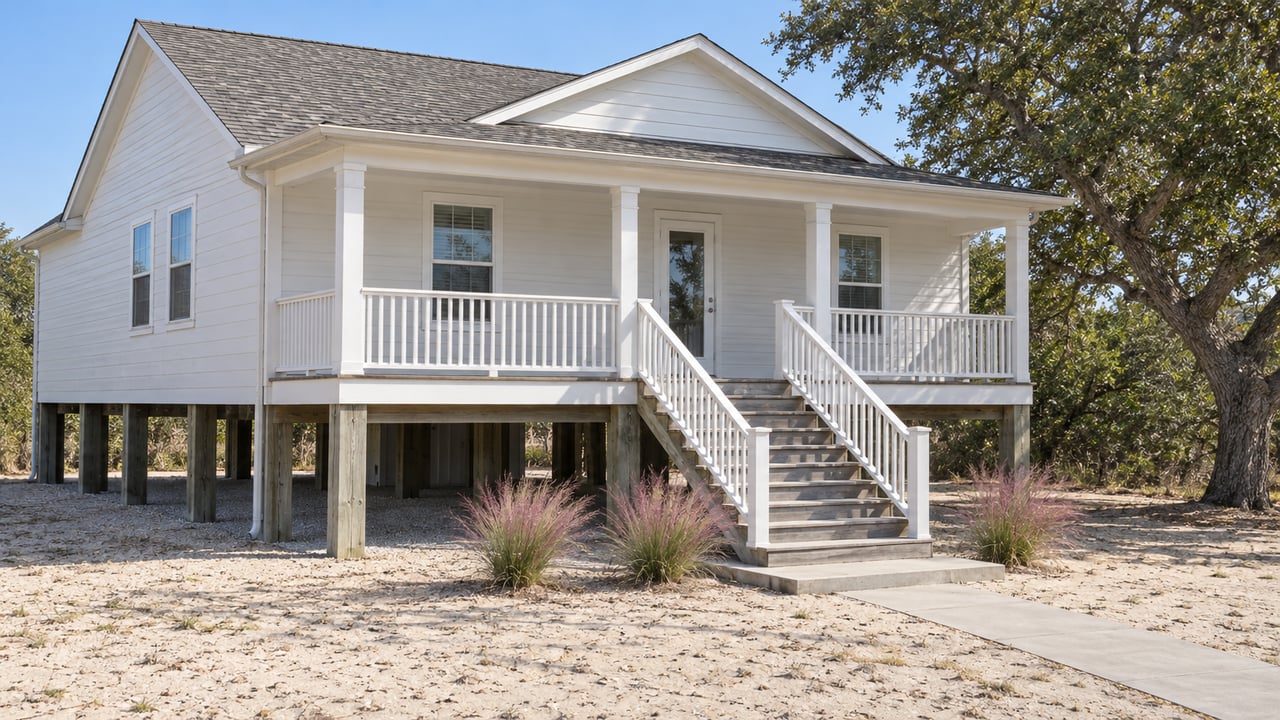
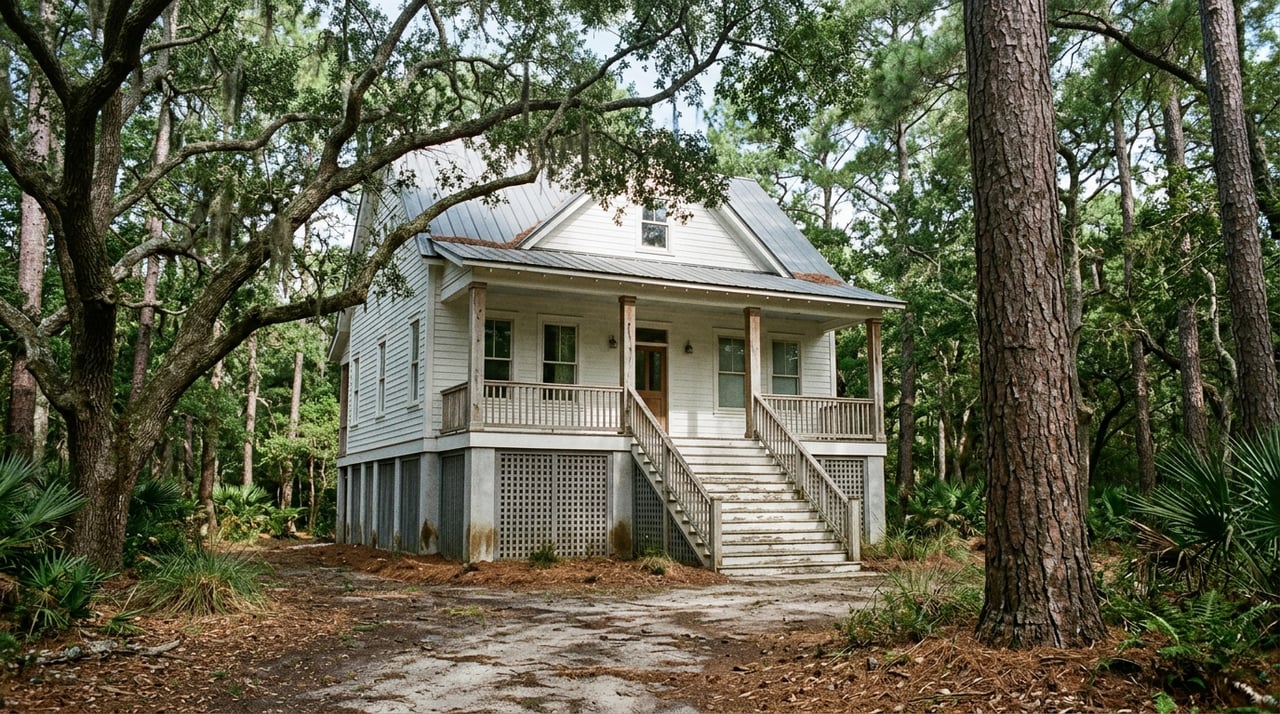
The explanation is not hidden in a spreadsheet. It is written into the town's own description of itself. The Town of Pine Knoll Shores enforces building height limits, tree preservation requirements, and impervious surface restrictions that go further than what neighboring towns require, and the town describes these rules as the deliberate mechanism that has kept its maritime forest canopy intact for decades. New construction has to work around existing trees rather than through them. Lots that could hold a bigger footprint elsewhere on Bogue Banks get scaled back here by design.
That is a supply story, not a demand story. When a town caps how much can be built on a given parcel, it caps how many parcels will ever come to market able to satisfy a buyer looking for more square footage in a hurry. The homes that do sell tend to be the ones that already fit the mold the town has spent decades protecting: modest footprints tucked into the canopy rather than maximized structures pushing the lot line. Fewer of those trade in a given month. When one does, the buyer who wants exactly that has fewer alternatives to walk away toward, and price per square foot reflects it.
A Court Case Involving Zoning Enforcement
It would be easy to assume these are the kind of restrictions that exist on paper but bend in practice. A 1991 North Carolina Court of Appeals case says otherwise. In Town of Pine Knoll Shores v. Evans, the town sued a homeowner over a deck built in the backyard along an artificial canal connected to Bogue Sound. The homeowners had been told by the town's Community Appearance Committee in 1987 that the partially built structure violated zoning ordinances. They kept building anyway, finishing it the following year. The town took them to court over it, and the case turned on whether the structure was legally a "deck" or a "ground cover," with the underlying building permit requirement never in dispute.
That case is decades old, but it offers a concrete example for buyers to keep in mind when planning renovations: zoning requirements can affect what owners build. The setback, height, and tree-preservation rules shape what gets built today. Anyone planning to add a floor, extend a footprint, or clear a stand of trees for a better sound view should account for the applicable requirements.
What a Thin Market Actually Feels Like From the Inside
A thin market and a cold market look similar on a chart and feel completely different to the people living through them. Cold markets have falling prices and sellers cutting to attract anyone who will look. Thin markets have steady or rising prices and sellers waiting for the one buyer whose criteria happen to match what's actually for sale.
Pine Knoll Shores in 2026 is the second kind. Twenty-seven homes sold in May, up slightly from 20 the year before, which is a small enough count that a handful of unusual sales can swing the per-square-foot figure in either direction. That volatility is itself informative. In a deep market with hundreds of monthly transactions, one estate sale on a wooded double lot barely moves the needle. In a market this size, it can move the median sale price by tens of thousands of dollars. Buyers should read the price trend as directionally real, since it lines up with the supply story the zoning explains, but treat any single month's figure as noisy rather than precise.
Three Towns, Three Different Bets
Bogue Banks is one barrier island, but its three main towns made different choices about what to become, and those choices show up in the market data as much as they show up in the skyline.
Atlantic Beach built around its Circle, the roundabout where the bridge road meets the beach, and let restaurants, bars, and high-rise condominiums cluster there. It functions as the commercial and social center for the island, and that density means turnover, walkability, and a beach that gets genuinely crowded on summer weekends. Emerald Isle went a different direction, building its identity around large rental houses that sleep ten to twenty people, with a commercial strip along Emerald Drive built to serve vacationing families rather than year-round residents. Pine Knoll Shores chose neither. No commercial beachfront, fewer large rental properties, and a beach that on a weekday in shoulder season can leave you with a quarter mile of sand to yourself.
Here is what that looks like when you line the three up:
- Atlantic Beach: highest density, most commercial activity, fastest turnover, built for nightlife and restaurant variety.
- Emerald Isle: rental-house economy, large multi-bedroom homes built for group vacations, a well-run seasonal machine.
- Pine Knoll Shores: capped density, protected canopy, fewer transactions, a buyer pool that specifically wants less rather than more.
None of these are better or worse choices. They are different bets on what a beach town should optimize for, and each one produces a housing market with its own internal logic. Pine Knoll Shores also carries two anchors that shape its identity without adding commercial density: the North Carolina Aquarium at Pine Knoll Shores and the Crystal Coast Country Club, a semi-private 18-hole course. Neither pulls the town toward the Circle's model. Both reinforce the quieter one.
What This Means If You're Comparing Pine Knoll Shores to Its Neighbors
If you are cross-shopping the island on spreadsheet metrics alone, three things are worth carrying into that comparison.
First, a longer days-on-market figure here does not mean weak demand. It means fewer qualifying listings and a buyer pool willing to wait for the right one rather than take the closest available substitute. Second, price per square foot climbing while transaction counts stay modest is consistent with supply constrained by ordinance, not a bubble inflating on speculation. Third, if a renovation or expansion is part of your plan, budget time and patience into the permitting process. The tree-preservation and height rules that keep the market thin are the same rules a contractor will need to work around.
None of this means Pine Knoll Shores is a harder place to buy well. It means the market rewards a buyer who knows what they are actually shopping for: not the fastest-moving inventory on Bogue Banks, but some of the most protected.
A Couple of Questions Worth Asking Before You Write an Offer
Does a slower days-on-market figure mean I have more room to negotiate? Not necessarily. A property sitting longer in a thin market can mean the seller is waiting for a specific buyer rather than pricing to move, especially on wooded or canal-front lots where the pool of interested buyers is small by design.
If I want to add square footage later, should I check the zoning before I make an offer? Yes. Given how specifically the town's height and tree-preservation rules are written and enforced, any expansion plan should be checked against the current ordinance before you're under contract, not after.
If you're weighing Pine Knoll Shores against its island neighbors and want the specific parcel-level answers, not just the townwide averages, the Copeland & Bernauer Real Estate Team has spent years working these exact zoning lines and canal-front lots. Reach out for an instant home valuation or a straight answer on what a given lot can actually support before you write the offer.
This article is general information, not legal, tax or financial advice. Consult a qualified professional about your situation.