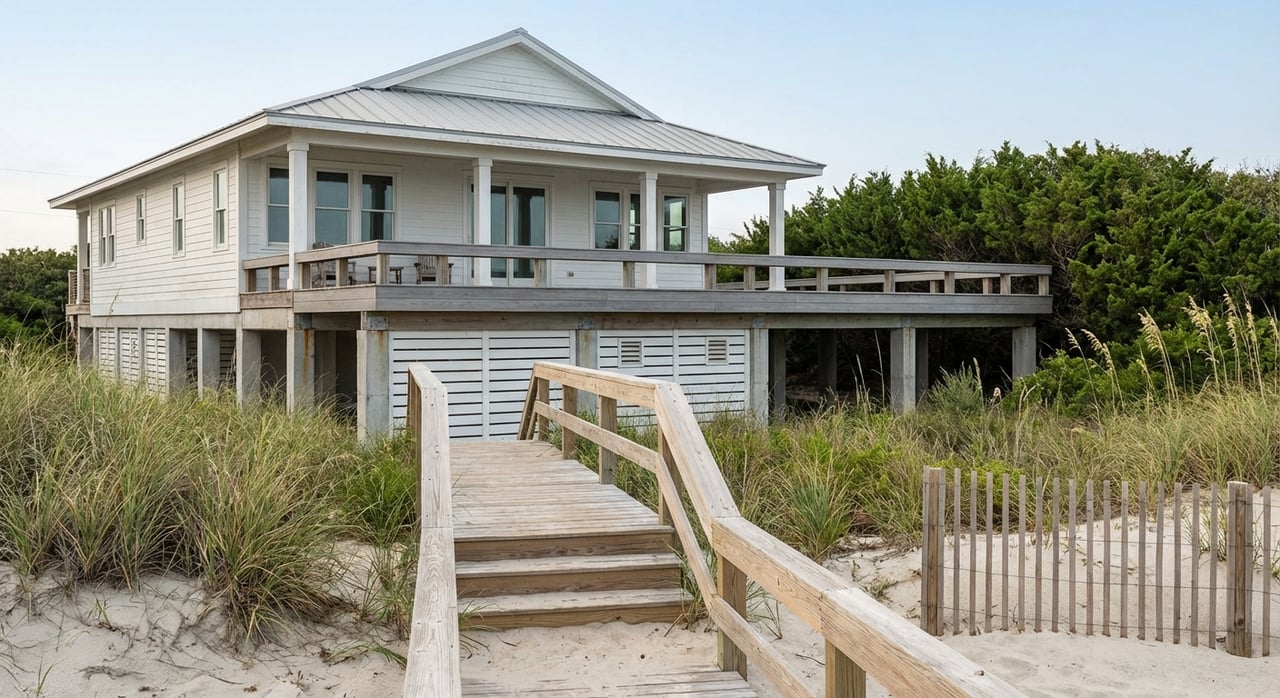
Ever dreamed of waking up to the sound of Atlantic surf and a sunrise over Bogue Banks? If you are eyeing an oceanfront home in Atlantic Beach, you want the real picture on risk, insurance, rentals, and upkeep before you fall in love. This guide gives you the basics you need to make a confident decision, from updated flood maps to beach nourishment and short-term rental rules. Let’s dive in.
Atlantic Beach oceanfront basics
Atlantic Beach sits on Bogue Banks, a barrier island managed in a coordinated way with neighboring towns. That regional approach matters, because shoreline projects on one reach can influence conditions on others. The county and partners follow a long-range plan to nourish beaches and manage inlets across the island, which helps maintain dune lines and beach width over time. You should view any oceanfront purchase in this bigger island context.
Local funding plays a role. Room-occupancy tax revenue, along with state and federal sources, supports nourishment under North Carolina law. That means tourism trends and county priorities can shape how often projects occur and where sand is placed.
Know your flood and erosion risk
2025 FEMA flood maps
FEMA’s updated Flood Insurance Rate Maps for Atlantic Beach became effective on January 17, 2025. The town has confirmed the change, so you should check the current panel for any address early in due diligence. Start with the town’s notice on the update, then run an address search at the FEMA Map Service Center to see zone, base flood elevation, and map panel details.
- Review the town’s announcement on the 2025 map effective date: FEMA flood maps update
- Pull the address-level map: FEMA Map Service Center
Atlantic Beach participates in the NFIP Community Rating System and reports a Class 8 rating, which helps with NFIP premium discounts. For help locating Elevation Certificates for newer homes and other flood resources, use the town’s flood information page.
- Town resources and CRS details: Flood information and Elevation Certificates
VE, AE, and LiMWA zones
FEMA distinguishes wave and surge risk in coastal areas. Many oceanfront lots fall within VE or Coastal A zones, which trigger specific construction standards and can affect insurance costs. Look for the Limit of Moderate Wave Action line on the map, since it signals where damaging waves can still occur.
- Learn how FEMA shows VE, AE, and LiMWA: Coastal flood map features
State oceanfront rules
North Carolina’s Coastal Resources Commission sets oceanfront rules that work alongside FEMA maps. Setbacks are based on long-term erosion rates, dune protection is required, and permanent hard structures on the oceanfront are generally prohibited. In designated ocean hazard areas, pile foundations and other storm-resilient methods are required.
- Review the state rule text: NC CAMA oceanfront standards
What this means for you:
- Expect elevated construction on pilings with living areas above base flood plus freeboard.
- Plan projects to stay landward of the primary dune and within state setbacks.
- Use your surveyor and designer to align site plans with both FEMA and CAMA rules.
Beach nourishment, in plain terms
How the master plan works
Bogue Banks follows a long-horizon nourishment program that places sand across different reaches based on need and funding. Major projects have occurred after large storms, like the post-Florence work. Nourishment can widen the beach and strengthen dunes, which helps reduce near-term storm impacts and supports rental appeal, but it is not permanent.
- Island-wide planning context: Bogue Banks Master Beach Nourishment Plan
The county’s ability to schedule and scale projects depends on funding sources, permits, borrow sand availability, and contractor windows. A portion of local room-occupancy tax revenue is directed to nourishment by state law, which ties tourism performance to beach maintenance decisions.
- How occupancy tax supports nourishment: NC House Bill 698
What to review for your lot
- Recent nourishment history for the specific reach.
- Any permanent easements or access conditions recorded with past fills.
- Dune health and vegetation, plus any scheduled dune planting.
- How site elevation and dune line interact with the home’s foundation and ground-level spaces.
Also note the broader backdrop: the nearby NOAA gauge at Beaufort shows a long-term rise in relative sea level, with periods of faster change. Over time, higher water levels can increase flooding frequency and erosional stress, which is why nourishment and dune care are recurring needs.
- Local sea-level trend data: NOAA Beaufort tide gauge
Insurance and lending costs
Flood insurance today
FEMA’s Risk Rating 2.0 prices NFIP flood policies based on a property’s specific risk. Elevation, distance to water, wave exposure, and building details all factor into premiums. Two otherwise similar oceanfront homes can have very different prices, so always get a current quote during due diligence.
- How FEMA prices flood risk now: Risk Rating 2.0 overview
NFIP has coverage limits. Many oceanfront owners supplement with a private flood policy or higher limits through a private carrier to reach full replacement values. Work with a licensed North Carolina agent to compare options and ensure your lender’s requirements are met.
Wind and homeowners coverage
Wind and hail coverage is separate from flood. Along the Crystal Coast, some carriers limit coverage or adjust deductibles. North Carolina’s residual market programs can serve as insurers of last resort, but availability and terms change. A coastal-savvy agent can outline your options.
- Consumer guidance and contacts: NC Department of Insurance
Ways to control premiums
- Obtain or update an Elevation Certificate. A favorable elevation can help.
- Elevate mechanicals and use compliant breakaway walls under living areas.
- Confirm flood openings, tie-downs, and corrosion-resistant connectors meet code.
- Compare NFIP and private flood quotes, and model different deductible options.
Homes and construction features
What you will see
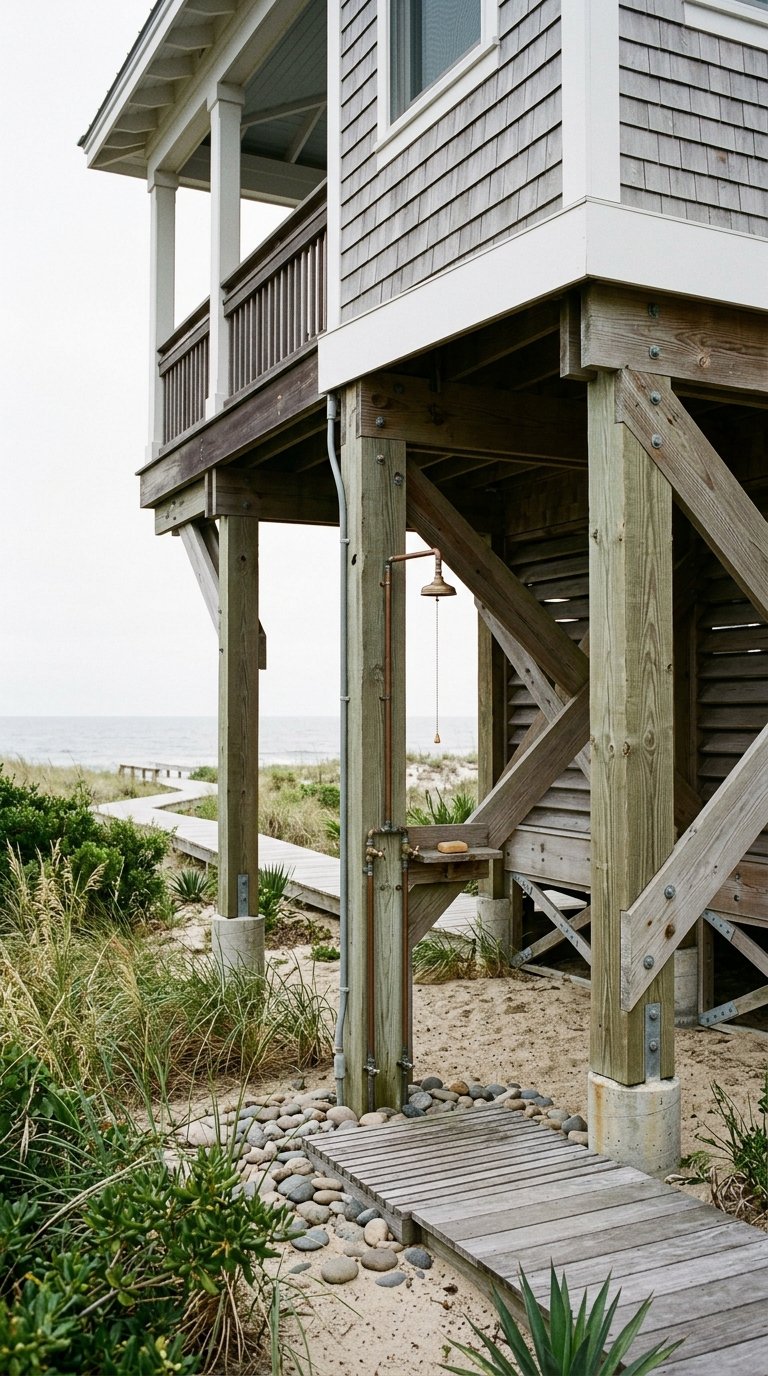
Most oceanfront homes in Atlantic Beach sit on pilings with living levels above the base flood elevation. Ground floors are often open for parking or enclosed with engineered breakaway walls where allowed. Utilities and HVAC are raised, and structural connections are designed for wind and wave forces per state standards.
- Foundation and design requirements in ocean hazard areas: NC CAMA oceanfront standards
Maintenance to budget
Salt air accelerates wear. Plan for more frequent attention to roofing, decks and railings, exterior paint, fasteners, and mechanical equipment. Regular inspections and a local maintenance plan can extend life cycles and protect rental seasons.
Upgrades and elevation
Retrofitting an older home to current standards can be costly, especially if lifting the structure. That said, raising living areas, relocating utilities, and improving flood openings can reduce future damage and may improve insurance pricing under Risk Rating 2.0. Always compare contractor estimates with potential premium savings before you decide.
Rentals and local rules
Short-term rental checks
Short-term rental allowances depend on town zoning and any HOA or condo rules, plus safety and occupancy tax requirements. Do not assume a home is eligible for nightly or weekly rentals without confirming the details with the Town of Atlantic Beach Planning & Development office and your HOA or building manager. You should also register and comply with local occupancy tax collection if you plan to rent.
- Start with town contacts and resources: FEMA flood maps update page
What drives revenue
Seasonal demand peaks in summer. Wider beaches from recent nourishment, easy access to public beach entries, parking, and proximity to shops and dining can improve bookings. Smart owner upgrades like durable outdoor furniture, high-speed internet, and protected storage for beach gear also help.
Smart due diligence checklist
Use this quick list to frame your offer and contingency timelines:
- Check the effective FEMA flood map panel and zone for the address at the FEMA Map Service Center.
- Ask the town for any existing Elevation Certificate and verify the base flood and freeboard requirements on the flood information page.
- Confirm whether the lot lies in VE, AE, or a Coastal A area, and note any LiMWA line using FEMA’s coastal map guidance.
- Look for any Letters of Map Change or Revision for the property at the FEMA Map Service Center.
- Review recent nourishment work for the reach and any recorded easements tied to past or future fills. Ask your closing attorney to search the title.
- Order quotes for NFIP and private flood, plus homeowners and wind coverage. For market guidance, check the NC Department of Insurance.
- Document foundation type, pile depth, elevation of mechanicals, and any recent structural inspection. Align plans with the state oceanfront standards.
- Verify wastewater setup. Confirm public sewer connection or septic details with the Town and County Health Department before closing.
- If you plan to rent, confirm zoning, HOA rules, life safety standards, and occupancy tax registration with the Town and county offices.
Local help when you need it
- Licensed surveyor or coastal engineer for Elevation Certificates, pile design review, and any LOMA or LOMR questions.
- Insurance agent who writes coastal risks for NFIP and private flood, plus homeowners and wind options.
- Town of Atlantic Beach Planning & Development for permits, ordinance questions, and any recent changes that affect your plans.
- Local property manager for realistic rental projections and seasonal operations.
Ready to tour or model cash flow?
You deserve clear answers before you buy oceanfront. Our team lives and works on the Crystal Coast, and we combine hands-on coastal know-how with rental projection expertise and national marketing. If you want address-level guidance on maps, insurance, nourishment history, and rental potential, reach out to the Copeland & Bernauer Real Estate Team. We are here to help you choose with confidence.
FAQs
What changed with Atlantic Beach’s FEMA maps in 2025?
- FEMA’s updated flood maps took effect on January 17, 2025. You should check the current panel and zone for any address before you make an offer.
What does a VE zone mean on Bogue Banks?
- VE zones indicate coastal high-hazard areas with wave action. Homes here face stricter building standards and often higher flood insurance exposure.
How does beach nourishment affect my home over time?
- Nourishment can widen the beach and strengthen dunes in the near term, which helps with storm impacts and rental appeal, but it requires periodic re-fills and is not permanent.
Do I need both flood and wind insurance for an oceanfront home?
- Yes, flood is separate from homeowners. You will likely need flood insurance and a homeowners policy that includes wind and hail coverage, based on your lender and location.
Can I rent my Atlantic Beach oceanfront home short term?
- Possibly. Short-term rental eligibility depends on town zoning and any HOA or condo rules, plus safety and occupancy tax requirements. Always confirm before you buy.
What is the CRS Class 8 rating and why does it matter?
- The town’s Class 8 Community Rating System standing can provide a discount on NFIP flood premiums. Individual premiums still depend on your property’s specific risk.